The 45+ Hair Wellness Project
Hair wellness after 45: understand what's changing before you buy anything.
Lufan Lab is an independent educational hub on hair wellness for women 45+. We look at what the research actually shows — about menopause, postpartum shedding, GLP-1 use, nutrition, and supplements — so you can ask better questions before you spend money on a formula.

Start here
Understand the change you are noticing.
Different life stages produce different patterns of hair change. These guides look at the evidence behind each one — what is expected, what deserves assessment, and where a supplement fits or does not fit.
A closer look at hair wellness
Understanding your hair is the first step.
From everyday care to changes in hair density, understanding what you are noticing can help you make more informed decisions.
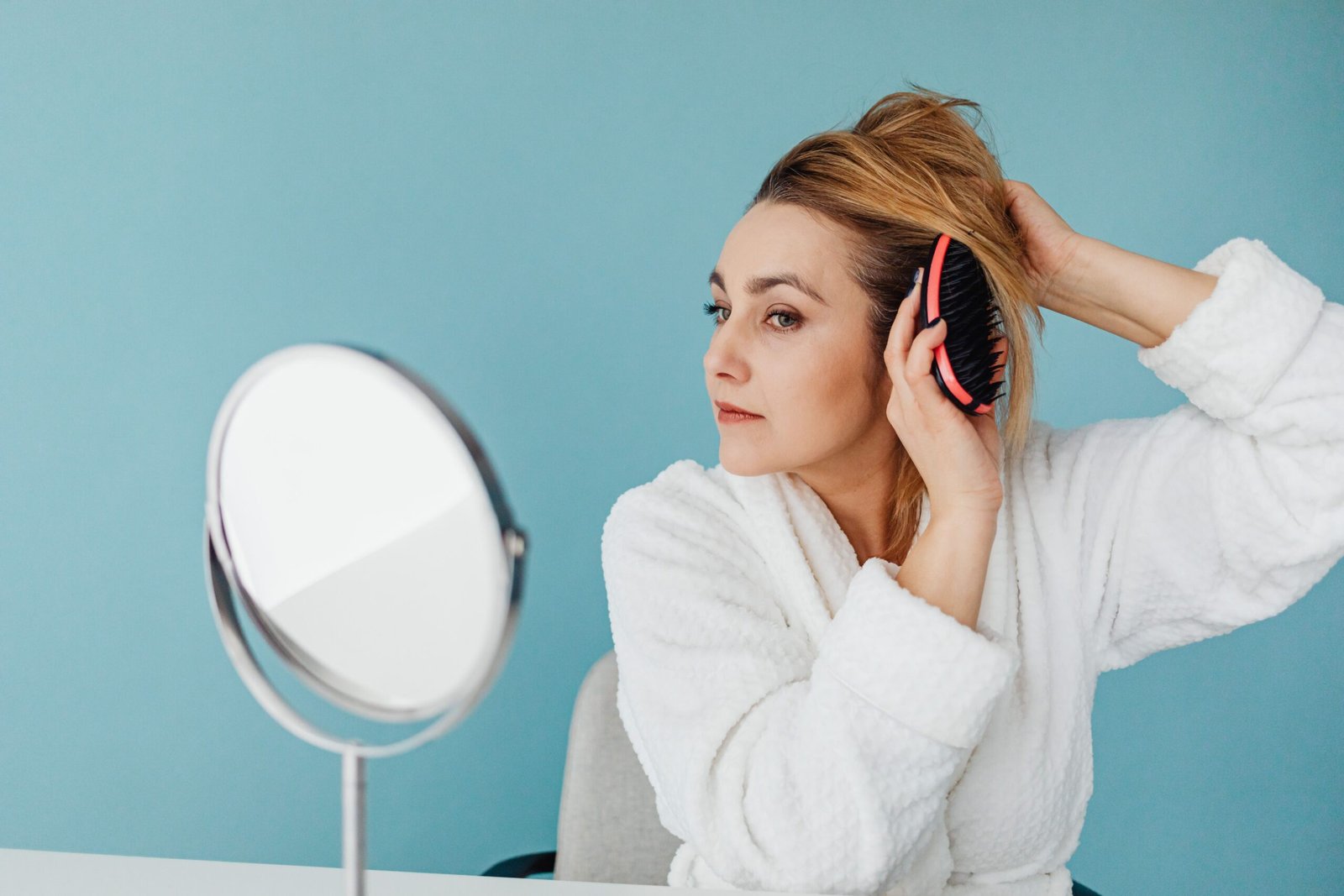
Beyond the label
Every hair type deserves informed care.
Understanding ingredients, their evidence and their limitations is part of making thoughtful choices about hair wellness.

Menopause
Menopause and hair thinning
What hormonal changes do to hair, what the research shows, and which questions are worth asking before choosing a supplement.
Read the guidePostpartum
Postpartum hair loss
Why postpartum shedding happens, what a realistic timeline looks like, and where a supplement fits — or does not fit.
Read the guideGLP-1
GLP-1 medications and hair shedding
Why rapid weight change can trigger shedding, what the research does and does not support, and what to discuss with your prescriber.
Read the guideHair basics
Shedding, thinning, or breakage?
They can look similar at first, but they do not have the same cause. A short glossary to help you name what you are noticing.
Read the guideThe 45+ Hair Wellness Project
An editorial project, not a product page.
Hair changes in midlife are common, but the advice online often collapses them into a single story — usually one that ends with a supplement. In reality, hair loss has many causes, and a supplement is not automatically the right response.
Lufan Lab exists to slow that story down. We look at what the research actually shows, distinguish product claims from published evidence, and do not treat testimonials as proof of effectiveness. When we link to a product, we say so clearly.
If you are looking for a quick fix, this is not the place. If you are looking to ask better questions, it is.

Hair changes are worth understanding — not automatically attributing to age, and not automatically handing to a product.
— Lufan Lab editorial standard
How we evaluate supplements
Criteria that matter more than the front of the bottle.
When we look at a hair supplement — including the ones we link to — we use the same four criteria. They are not a guarantee that a product will work for you, but they make it possible to make an informed decision.
- 1Are the amounts disclosed? For every ingredient per serving — not just the names that appear prominently on the label.
- 2What evidence supports the finished formula? Research on an individual ingredient is not the same as clinical research on the product as a whole.
- 3Is safety information easy to find? Warnings, interactions, lab test interference, and who should not use the product.
- 4Is the total cost clear? Subscription terms, cancellation, shipping, and the cost of continuing beyond the first order.

Also worth reading
Hair supplement red flags
A practical checklist of the marketing signals that deserve a closer look — guarantees, hidden amounts, testimonials used as proof, and urgent purchase pressure.
Read the checklistIngredient guides
Look at one ingredient at a time.
Hair supplements are often marketed by their headline ingredients. These guides look at what the research actually shows about individual ingredients — and where the gap between evidence and marketing is widest.
Biotin
Biotin for hair: what the research shows
What biotin is, why it is so widely marketed, the risk of lab test interference, and how to evaluate a biotin-containing formula.
Read the guideBuyer's checklist
Hair supplement red flags
The marketing signals that deserve a closer look — and the questions worth asking before you buy any formula.
Read the checklistFrequently asked
Questions worth asking before you decide anything.
Can a supplement solve hair loss after 45?
Not on its own. Hair loss has many causes — hormonal changes, thyroid conditions, iron deficiency, medications, pattern hair loss, and more. A supplement may be relevant in some situations, but it is not a universal answer, and it does not replace a professional assessment.
Is biotin effective for hair growth?
The U.S. National Institutes of Health notes that there is little scientific evidence supporting biotin supplements for improving hair in people who are not deficient. High doses can also interfere with some laboratory tests, including certain thyroid tests. If you are considering biotin, it is worth discussing with a healthcare professional.
When should I see a dermatologist?
Sudden or patchy hair loss, scalp pain or irritation, or rapidly progressing thinning deserve professional assessment. A dermatologist can examine the scalp and hair, review your history, and decide whether testing or treatment is appropriate.
Does Lufan Lab sell supplements?
No. Lufan Lab publishes educational content. Some pages link to a supplement evaluation guide that contains affiliate links to a product we describe — and we disclose that clearly. We do not sell products directly.
How do you choose which products to write about?
We write about products when there is a reason to look at them carefully — not because they are the best, but because they illustrate the criteria that matter when evaluating a formula. Our evaluation criteria are the same for every product we describe.
Your next step
Understand first. Compare carefully. Decide with confidence.
Start with the broader Hair Wellness guide for a clear overview of the factors that can influence women's hair — and the Supplement Evaluation Guide when you are ready to compare products.
Read the Hair Wellness Guide Explore the Supplement Evaluation Guide