The 50+ Hair Wellness Project · Menopause
Menopause and Hair Thinning: What the Evidence Actually Says
Hormonal changes around menopause can affect the appearance and density of hair. But not every change is "just age," and not every supplement is the right response. This guide looks at what the research shows, what it doesn't, and which questions are worth asking before you decide anything.
At some point in midlife, many women notice that their hair does not look or feel the same. A part may seem wider. A ponytail may feel smaller. Strands may become finer, drier, or more fragile. These changes can be frustrating, and the advice online often promises one simple answer — usually a supplement.
Menopause is genuinely part of the picture for many women. But it is not the only factor, and it is not always the main one. This guide takes a more careful approach: first understand what hormonal changes do to hair, then look at what the research actually supports, and finally consider how a supplement fits — or does not fit — into that picture.
1. Why hair changes during menopause
Hair grows in cycles. Each follicle moves through a growth phase (anagen), a transition phase (catagen), and a resting phase (telogen), before shedding and starting again. Hormones influence how long each phase lasts and how many follicles are active at any given time.
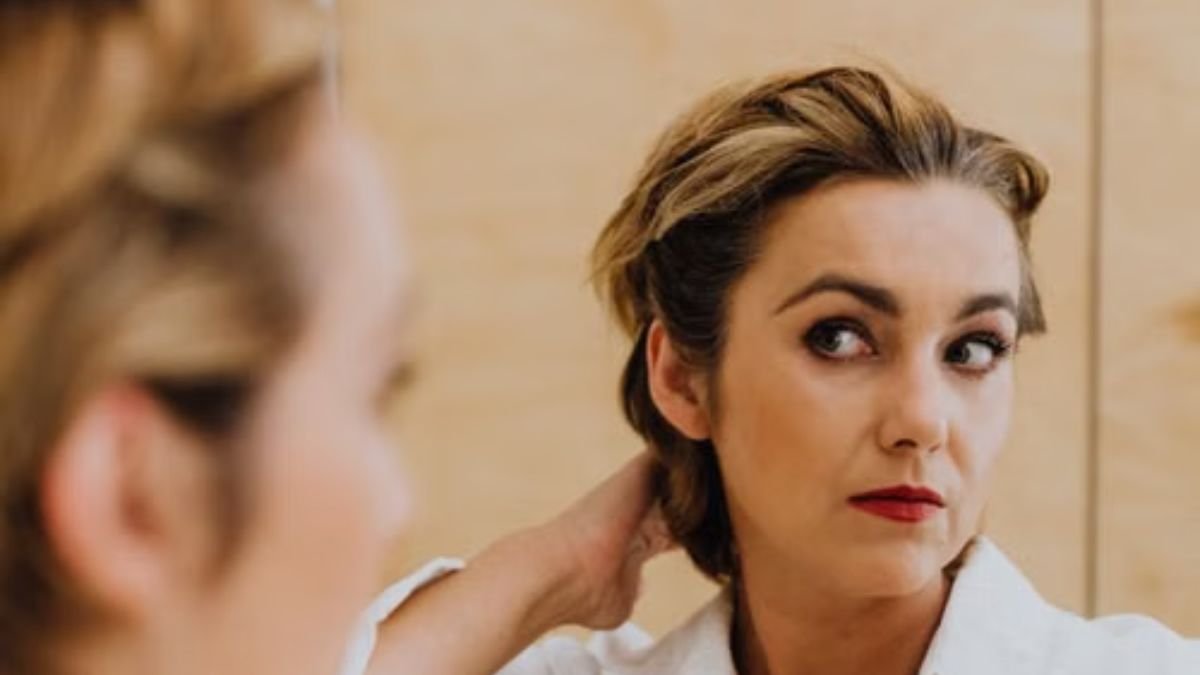
Around menopause, levels of estrogen and progesterone decline. The American Academy of Dermatology notes that some women notice thinning at menopause, sometimes first seeing a widening part or a receding hairline. The shift is not dramatic for everyone, but for many women it is noticeable.
What the hormonal change does not do is explain every case of hair shedding or thinning. Thyroid conditions, iron deficiency, illness, significant stress, certain medications, inherited hair-loss patterns, and scalp conditions can all produce similar signs. More than one factor may be involved at the same time.
2. What the research actually shows
The most common form of progressive thinning in women is female pattern hair loss, which often begins in midlife and is influenced by hormones and genetics. It is a recognized condition with a characteristic pattern, and it is different from temporary shedding triggered by stress or illness.
That distinction matters. Female pattern hair loss tends to progress slowly and responds to specific treatments evaluated by a dermatologist. Temporary shedding — sometimes called telogen effluvium — often resolves on its own once the trigger is addressed. Treating one as if it were the other can waste time and money.

Research on individual ingredients is also often more limited than marketing suggests. Some ingredients have been studied in small trials, sometimes in men rather than women, and sometimes as part of a multi-ingredient formula rather than in isolation. That does not make them useless — but it does mean the evidence deserves to be read carefully rather than summarized as a headline.
Start with the bigger picture
Understand the different factors that can affect hair
Our companion guide looks at aging, menopause, nutrition, shedding, thinning, and everyday hair care — before any product enters the picture.
Read the Hair Wellness Guide3. Perimenopause, menopause, and post-menopause
Menopause is not a single moment. Perimenopause — the transition years before the final menstrual period — can last several years, and hormonal fluctuations during this time may already affect hair. Some women notice changes well before their last period; others notice them afterward.

This timing matters for two reasons. First, it means that "waiting for things to settle" is not always a good strategy, because the transition itself can be long. Second, it means that hair changes during perimenopause should not be automatically attributed to menopause alone — the same assessments that apply at any other life stage still apply here.
4. What you can realistically do
There is no single intervention that reverses menopausal hair change. What tends to help is a combination of approaches, each modest on its own:
- Get a proper assessment. A dermatologist or another qualified healthcare professional can examine the scalp and hair, review your history, and decide whether blood tests (iron, thyroid, vitamin D, among others) are appropriate.
- Treat hair gently. Conditioner on the lengths and ends, gentle detangling on wet hair, less frequent high heat, and avoiding tight hairstyles that pull on the hair can reduce avoidable breakage.
- Support overall nutrition. Inadequate intake or a confirmed deficiency can contribute to hair problems. Correcting a deficiency is different from assuming that extra vitamins will help someone who already gets enough.
- Consider a supplement as a complement, not a substitute. A supplement is one option among several. It does not replace assessment, and it does not work for every cause of hair change.
Hair changes during menopause are worth understanding — not automatically attributing to age, and not automatically handing to a product.
5. How to evaluate a hair supplement for this life stage
If you decide to explore a supplement, the same criteria apply here as anywhere else — but a few deserve particular attention for women in midlife:
- Are the amounts disclosed? Look for the quantity of each ingredient per serving, not just a list of names or a proprietary blend with hidden amounts.
- Was the research done in women in this life stage? Studies in men, or in younger women, are not automatically applicable. Check who the research actually involved.
- Is the product-specific evidence available? Research on an individual ingredient is not the same as clinical research on the finished formula. Both can be relevant, but they answer different questions.
- Is safety information easy to find? Review warnings, possible interactions, and who should seek professional advice before use. Biotin, for example, is widely marketed for hair, but the U.S. National Institutes of Health notes little scientific evidence that it improves hair in people who are not deficient — and high doses can interfere with some laboratory tests, including certain thyroid tests.
- Can you understand the total cost? Check serving size, days per container, subscription terms, cancellation rules, shipping, and the cost of continuing beyond the first order.
Before you decide
Know what to look for before choosing a supplement
Our supplement evaluation guide walks through ingredient amounts, product-specific evidence, safety details, and the full purchase terms — so you can compare formulas on criteria that matter.
Read the Supplement Evaluation Guide6. When to see a professional
Some hair changes deserve prompt professional assessment rather than an attempt to self-diagnose with a supplement. Seek advice if you notice:

- Sudden or patchy hair loss
- Scalp pain, itching, or visible irritation
- Rapidly progressing thinning
- Hair loss accompanied by other symptoms (fatigue, weight change, skin changes)
A dermatologist can examine the scalp and hair, review your history, and decide whether testing or treatment is appropriate. That assessment is more valuable than any product decision you can make on your own.
7. A more thoughtful next step
Menopause is one factor in hair change, not the whole explanation. The most useful next step depends on what is changing, how quickly it is happening, your health history, and the likely cause.
Start by observing the pattern: when the change began, whether it is shedding or gradual thinning, whether your scalp has changed, and whether anything else in your health or routine has changed. Bring those observations to a qualified healthcare professional. If you then explore products, compare them on the criteria that matter — amounts, evidence, safety, and cost.
Sources and further reading
This article is educational and draws on the following public health resources. These links are provided so readers can review the information directly.
Continue exploring
Compare formulas on criteria that matter
If you are considering a supplement, our evaluation guide helps you look beyond the front of the bottle — at amounts, evidence, safety, and total cost.
Explore the Supplement Evaluation GuideThis is an internal Lufan Lab link. No product purchase is required.
The 50+ Hair Wellness Project
Understand first. Compare carefully. Decide with confidence.
Explore the broader Hair Wellness guide for a clear overview of the factors that can influence women's hair, and the Supplement Evaluation Guide when you are ready to compare products.
Read the Hair Wellness Guide