Early Signs of Hair Thinning in Women: What to Look For
Hair thinning in women can develop gradually. You may notice that your usual hairstyle does not look quite the same, your ponytail feels smaller, or your scalp seems more visible along your part. These changes can be subtle at first, making them easy to overlook.
For many women, noticing a change in hair fullness can bring questions and uncertainty. Is it simply a change in hair texture? Is more hair shedding than usual? Or could it be an early sign of thinning?
Understanding what to look for can help you pay attention to changes over time and decide when it may be helpful to seek professional advice.

1. A Wider Hair Part: An Early Sign of Hair Thinning
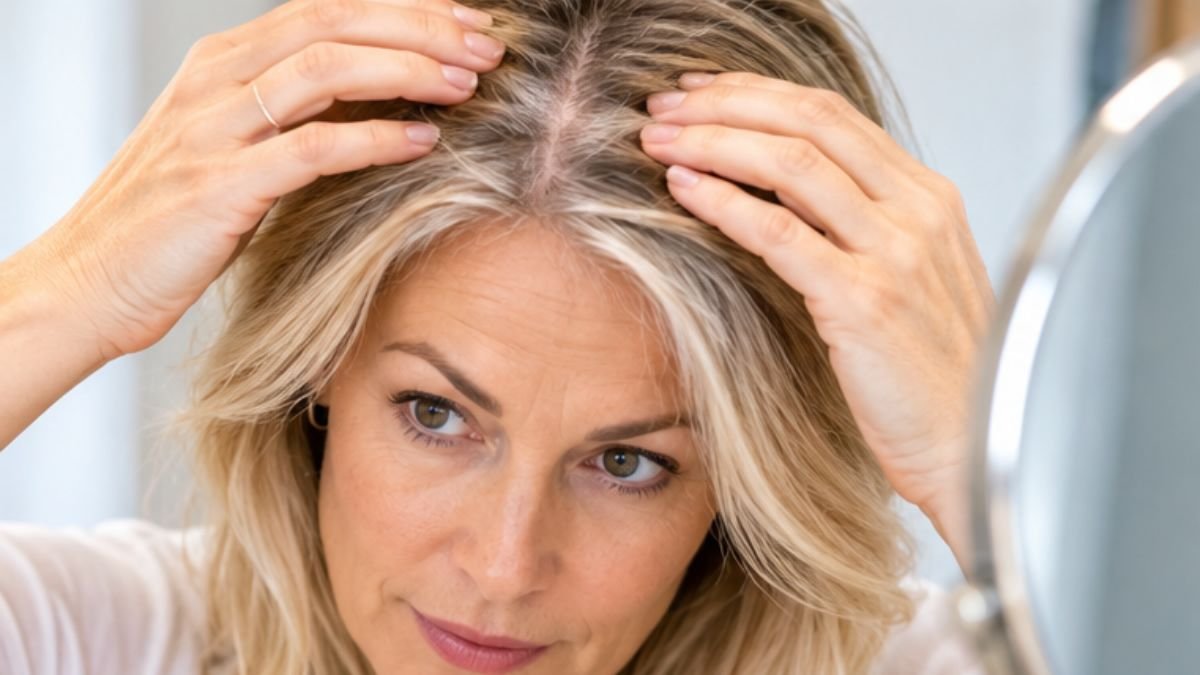
One of the changes some women notice is that their hair part appears wider than it used to be. When the hair gradually becomes less dense, more of the scalp may become visible along the part line.
You might notice this when styling your hair, looking in the mirror, or comparing recent photographs with older ones.
A wider part does not automatically mean you are experiencing hair loss. Hair placement, lighting, styling habits, and natural changes in texture can also affect how your part looks.
Hair density can change for different reasons as women get older. You can learn more in our guide to hair thinning in women over 45.
2. Hair Thinning in Women and Changes in Ponytail Volume
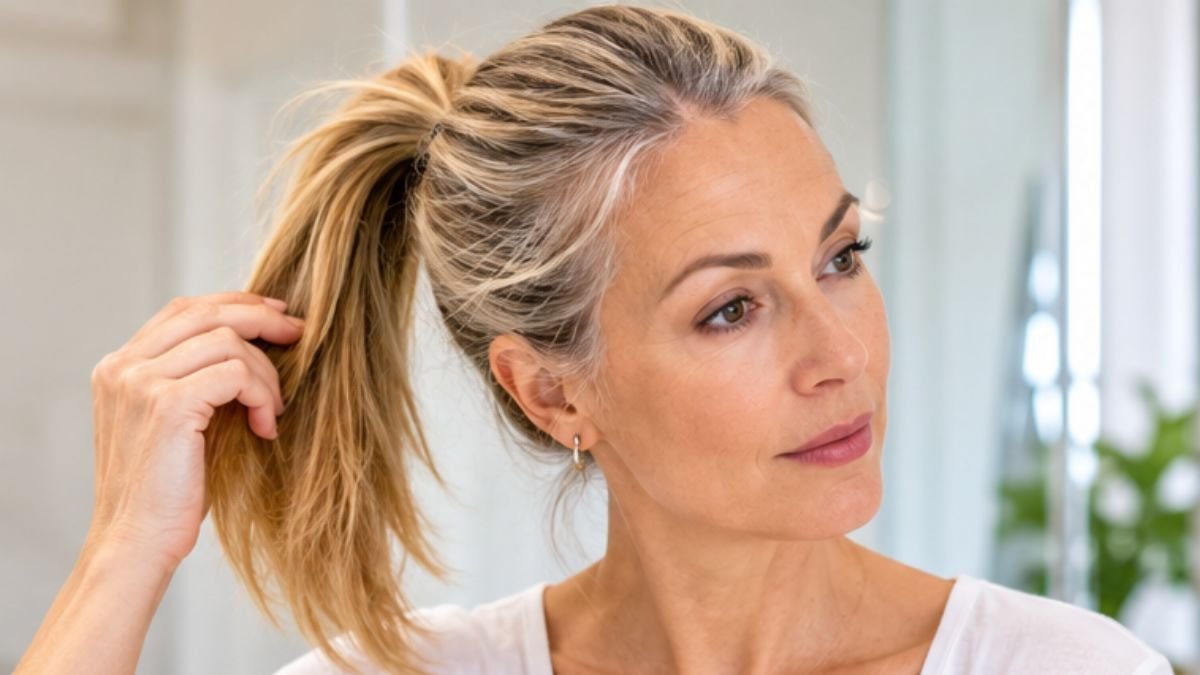
Another possible sign is a ponytail that feels smaller or looks less full than before.
Some women notice that they need to wrap a hair tie more times around their ponytail, or that their usual hairstyle seems to have less body and fullness.
This change can be related to a reduction in the number of visible hair strands, but it can also happen when individual strands become finer or more fragile.
Hair length, layering, breakage, and even the way you gather your hair can influence ponytail size. That is why it is useful to look at the overall pattern of changes rather than relying on one observation.
3. More Scalp Visibility
Have you noticed that your scalp seems easier to see under certain lighting conditions?
Increased scalp visibility can sometimes accompany changes in hair density. It may be more noticeable around the crown, along the part, or near the temples.
For some women, the change becomes apparent when their hair is wet, pulled back, or styled differently from usual.
However, scalp visibility varies naturally depending on hair color, strand thickness, hairstyle, and lighting. A single observation is not enough to determine whether thinning is occurring.
4. Changes in Hair Shedding
It is normal to shed some hair every day. Hair naturally goes through cycles of growth, transition, and resting before individual strands fall out.
Still, you may notice more hair than usual on your brush, in the shower, or on your pillow. A noticeable increase in shedding can sometimes be associated with temporary changes in the hair growth cycle.
Factors such as significant stress, illness, hormonal changes, nutritional deficiencies, weight changes, and certain medications may contribute to increased shedding.
In some cases, shedding is temporary. In others, it may be connected to an underlying condition that deserves professional evaluation.
Understanding the difference between increased shedding and gradual thinning can help you better interpret these changes. Read our guide to hair shedding vs. thinning.
Rather than focusing on the exact number of strands you lose each day, consider whether the amount has changed noticeably and whether the change continues over time.
5. Hair Breakage vs. Hair Thinning in Women: Why the Difference Matters
Hair breakage and hair thinning can sometimes create a similar appearance, but they are not the same thing.
Hair breakage
Breakage happens when hair strands snap along their length. You may notice shorter pieces, uneven ends, flyaways, or areas where the hair appears less uniform.
Frequent heat styling, chemical treatments, tight hairstyles, friction, and rough handling can contribute to hair damage and breakage.
Hair thinning
Thinning generally refers to a reduction in hair density or changes that make the hair appear less full. Depending on the cause, it may involve increased shedding, gradual changes in density, or a combination of factors.
One possible cause of progressive hair thinning in women is female pattern hair loss, a condition worth understanding when exploring changes in hair density.
Both conditions can occur at the same time. For example, damaged strands may break while other changes affect overall hair density.
If you are unsure what is happening, a dermatologist can examine your scalp and help distinguish between breakage, shedding, and different forms of hair loss.
6. When Should You Talk to a Dermatologist?
Not every change in hair appearance indicates a medical problem. However, it is worth seeking professional advice when changes are persistent, noticeable, or concerning to you.
Consider making an appointment with a dermatologist if you notice:
- Gradual but persistent thinning or reduced hair density.
- A widening part or increased scalp visibility.
- Sudden or unusually heavy hair shedding.
- Round or irregular patches of hair loss.
- Scalp itching, redness, scaling, pain, or other unusual symptoms.
- Hair changes accompanied by other symptoms that concern you.
A dermatologist can evaluate your hair and scalp, review your health history, and determine whether further examination or testing may be appropriate.
Identifying the reason for a change is important because different causes of hair loss may require different approaches.
Final Thoughts
Hair thinning does not always begin with a dramatic change. Sometimes, the first signs are small differences in your part, ponytail, hair volume, or the amount of shedding you notice.
Paying attention to these changes over time can help you better understand what is happening with your hair. It is also important to remember that appearance alone cannot establish the cause of thinning.
If you notice persistent changes or have concerns, professional guidance can help you understand your options and make informed decisions about your hair health.
And if you are still unsure whether your hair is naturally fine or becoming thinner, you may also find our guide helpful:
Further Reading
This article is for educational purposes only and is not a substitute for professional medical advice, diagnosis, or treatment. If you have concerns about changes in your hair or scalp, consult a qualified healthcare professional.