The 45+ Hair Wellness Project · A closer look
Shedding, Thinning, or Breakage? How to Tell the Difference
People often use "hair loss," "hair thinning," and "hair shedding" interchangeably. They can describe different experiences — and knowing which one you are noticing can change what you do next.
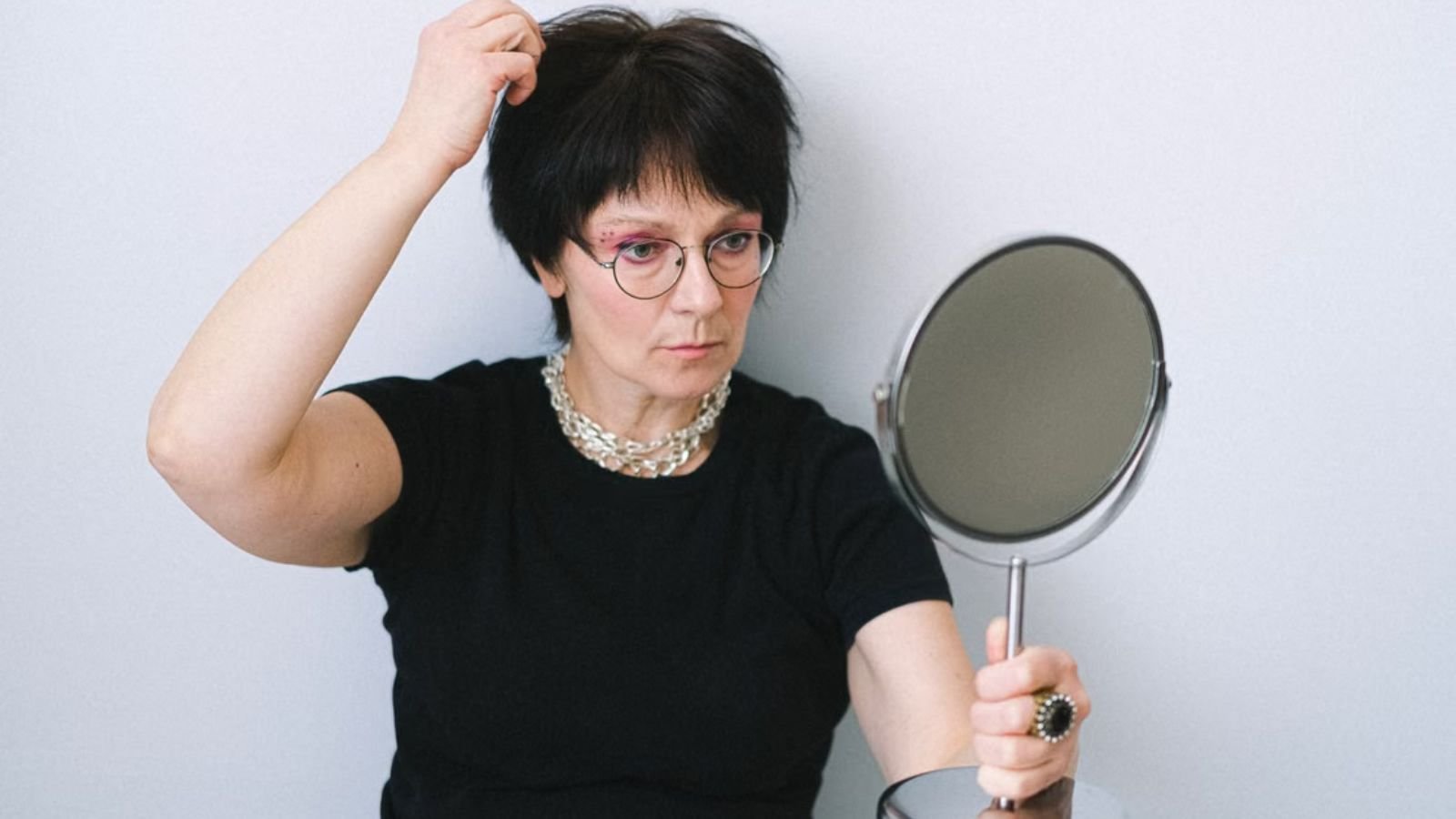
When hair starts to look different, the first question is usually "what is happening?" — but the more useful question is often "which of several things is happening?" Shedding, thinning, and breakage are three distinct experiences, and they do not always have the same cause or the same response.
This guide is a short glossary. It is not a diagnostic tool, and it does not replace a professional assessment. What it can do is help you describe what you are noticing more precisely — which in turn helps you ask better questions.
1. Shedding
What it looks like: More hairs than usual come out during washing, brushing, or throughout the day. You may notice more hair on the pillow, in the shower drain, or on the bathroom floor.
What it usually means: Shedding is a normal part of the hair cycle. Every follicle eventually releases its hair and starts a new cycle. What changes in "increased shedding" is the number of hairs released at once — usually because a larger share of follicles have shifted into the shedding phase together.
Common triggers: Significant stress, illness, surgery, rapid weight loss, childbirth, certain medications, and some hormonal changes. This pattern is often called telogen effluvium.
What it usually is not: Shedding is not the same as a follicle "dying." In most cases, the follicle is intact and will produce a new hair in time.
2. Thinning
What it looks like: Overall density decreases, or the part becomes more visible. Individual strands may become finer. The change is usually gradual rather than sudden.
What it usually means: Thinning is often a sign that follicles are producing smaller hairs over time, or that the growth phase is shortening. It can be progressive, and it is not always temporary.
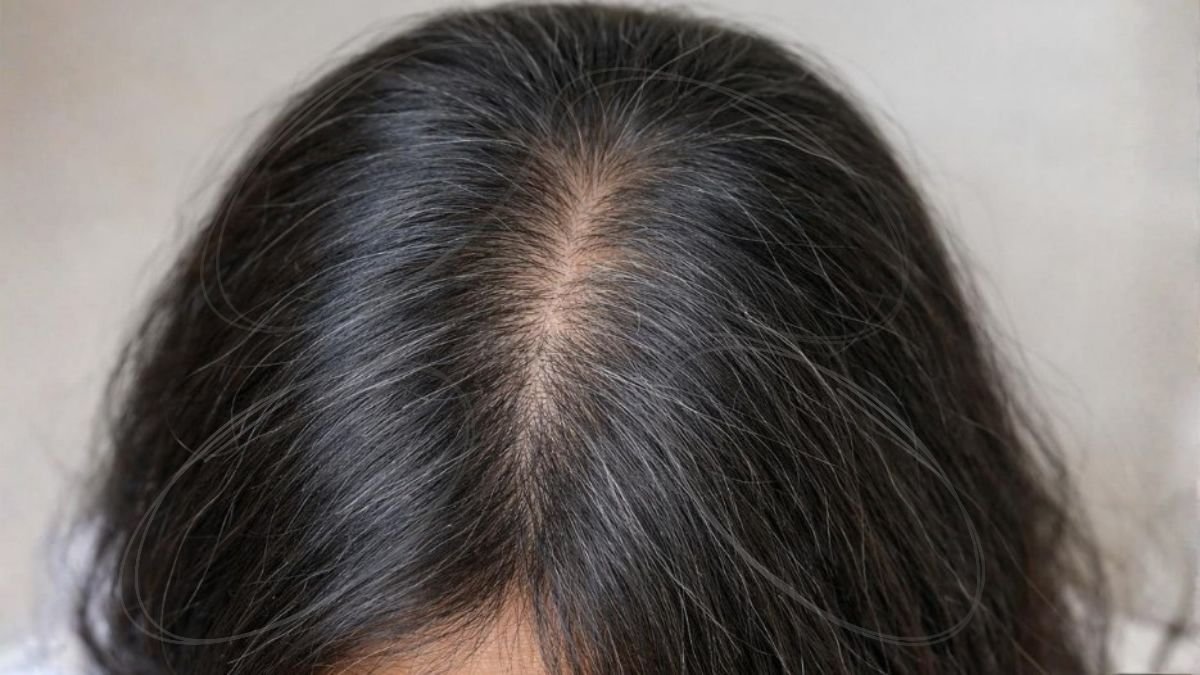
Common causes: Female pattern hair loss, hormonal changes, thyroid conditions, iron deficiency, and some medications. More than one factor may be involved.
What it usually is not: Thinning is not the same as shedding. You can have shedding without visible thinning, and thinning without obvious shedding.
Start with the bigger picture
Understand the different factors that can affect hair
Our companion guide looks at aging, menopause, nutrition, shedding, thinning, and everyday hair care — before any product enters the picture.
Read the Hair Wellness Guide3. Breakage
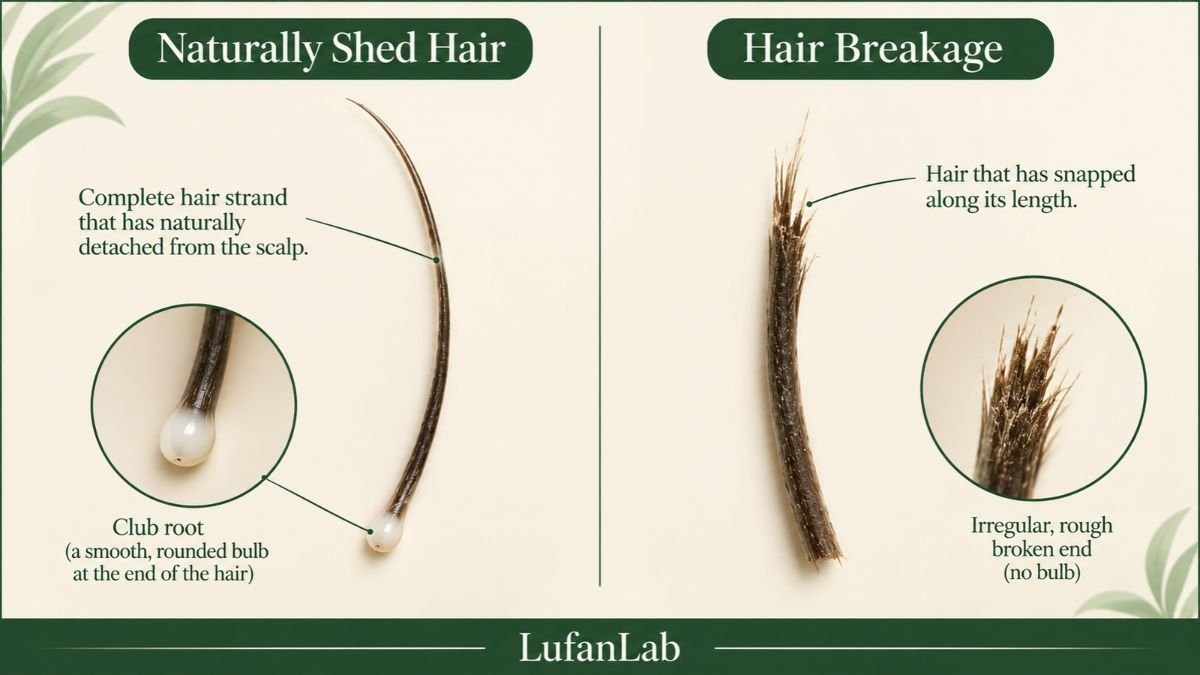
What it looks like: Strands snap along their length, leaving shorter pieces and uneven ends. You may notice broken hairs around the hairline or at the crown, or find small pieces of hair on your clothing.
What it usually means: Breakage is damage to the hair shaft itself, not a change in the follicle. The hair is growing, but it is breaking before it reaches its full length.
Common causes: Frequent high heat, harsh chemical processes, tight hairstyles, rough detangling, and hair that is already fragile from other factors.
What it usually is not: Breakage is not shedding or thinning. It responds to changes in hair care, not necessarily to a supplement.
Shedding, thinning, and breakage can overlap. But naming what you notice is the first step toward addressing the right thing.
4. How to tell them apart
A few practical observations can help you distinguish between the three:
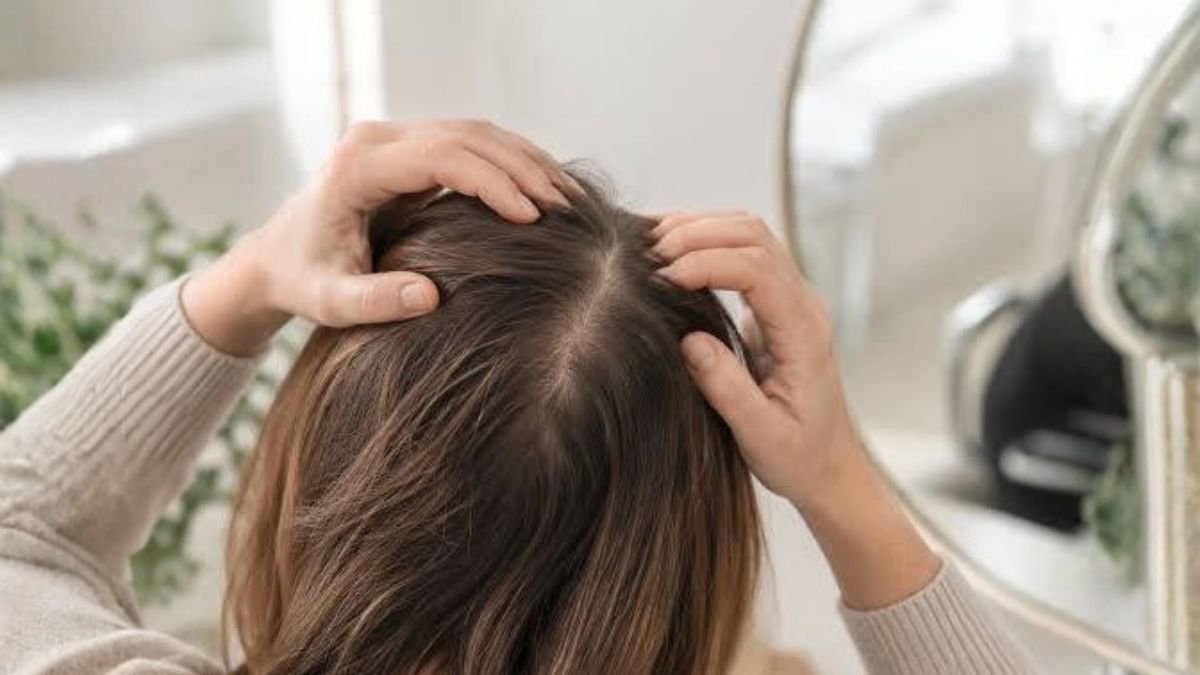
- Look at the hairs you are losing. A shed hair usually has a small white bulb at the root. A broken hair usually has a blunt or frayed end and no bulb.
- Notice the pattern. Shedding tends to be diffuse. Thinning tends to follow a pattern (widening part, receding hairline, reduced density at the crown). Breakage tends to appear as shorter pieces along the lengths.
- Notice the timing. Shedding often follows a trigger by two to four months. Thinning is usually gradual. Breakage often follows a change in hair care or styling.
- Notice the scalp. Changes in the scalp itself — irritation, flaking, pain — can point to a cause that deserves professional assessment.
5. What this means for your next step
Naming what you notice does not replace a professional assessment. But it does help you decide what kind of help to seek:
- If it looks like shedding: A healthcare professional can help identify the trigger and decide whether testing (iron, thyroid, vitamin D, among others) is appropriate. Most shedding resolves once the trigger is addressed.
- If it looks like thinning: A dermatologist can assess whether the pattern is consistent with a specific condition and discuss options. Thinning often benefits from earlier assessment.
- If it looks like breakage: Changes in hair care — gentler detangling, less heat, less tension — are the first step. A supplement is usually not the answer.
Many women experience more than one at the same time. That is one reason a professional assessment is more useful than trying to match a single product to a single symptom.
6. How to evaluate a supplement if you decide to explore one
If you decide to explore a supplement, the same criteria apply here as anywhere else:
- Are the amounts disclosed? Look for the quantity of each ingredient per serving, not just a list of names or a proprietary blend with hidden amounts.
- What evidence supports it? Distinguish research on an individual ingredient from clinical research on the finished product. Check whether studies involved people similar to you.
- Is safety information easy to find? Review warnings and possible interactions. Biotin, for example, is widely marketed for hair, but the U.S. National Institutes of Health notes little scientific evidence that it improves hair in people who are not deficient — and high doses can interfere with some laboratory tests, including certain thyroid tests.
- Can you understand the total cost? Check serving size, days per container, subscription terms, cancellation rules, shipping, and the cost of continuing beyond the first order.
Before you decide
Know what to look for before choosing a supplement
Our supplement evaluation guide walks through ingredient amounts, product-specific evidence, safety details, and the full purchase terms — so you can compare formulas on criteria that matter.
Read the Supplement Evaluation Guide7. When to see a professional
Some signs deserve prompt assessment rather than a wait-and-see approach:
- Sudden or patchy hair loss
- Scalp pain, itching, or visible irritation
- Rapidly progressing thinning
- Hair loss accompanied by other symptoms (fatigue, weight change, skin changes)
A dermatologist or another qualified healthcare professional can examine the scalp and hair, review your history, and decide whether testing or treatment is appropriate.
Sources and further reading
This article is educational and draws on the following public health resources. These links are provided so readers can review the information directly.
Continue exploring
Compare formulas on criteria that matter
If you are considering a supplement, our evaluation guide helps you look beyond the front of the bottle — at amounts, evidence, safety, and total cost.
Explore the Supplement Evaluation GuideThis is an internal Lufan Lab link. No product purchase is required.
The 45+ Hair Wellness Project
Understand first. Compare carefully. Decide with confidence.
Explore the broader Hair Wellness guide for a clear overview of the factors that can influence women's hair, and the Supplement Evaluation Guide when you are ready to compare products.
Read the Hair Wellness Guide