One Reader's Story: Thicker, Shinier Hair After a Year of Trying Everything
A reader's story • Hair care
Thicker, longer, shinier hair Reader Story

She tried everything for a year. Here's what finally changed her hair.

Joanna, 44, dealt with shedding, dryness, and thinning hair. A tip from her mom's friend led her to a simple routine she says brought back her thickness, shine, and confidence.

Opens the official page in a new tab.

How it started

Joanna had great hair back in school. Her mom paid close attention to it, and she kept up good habits for years.

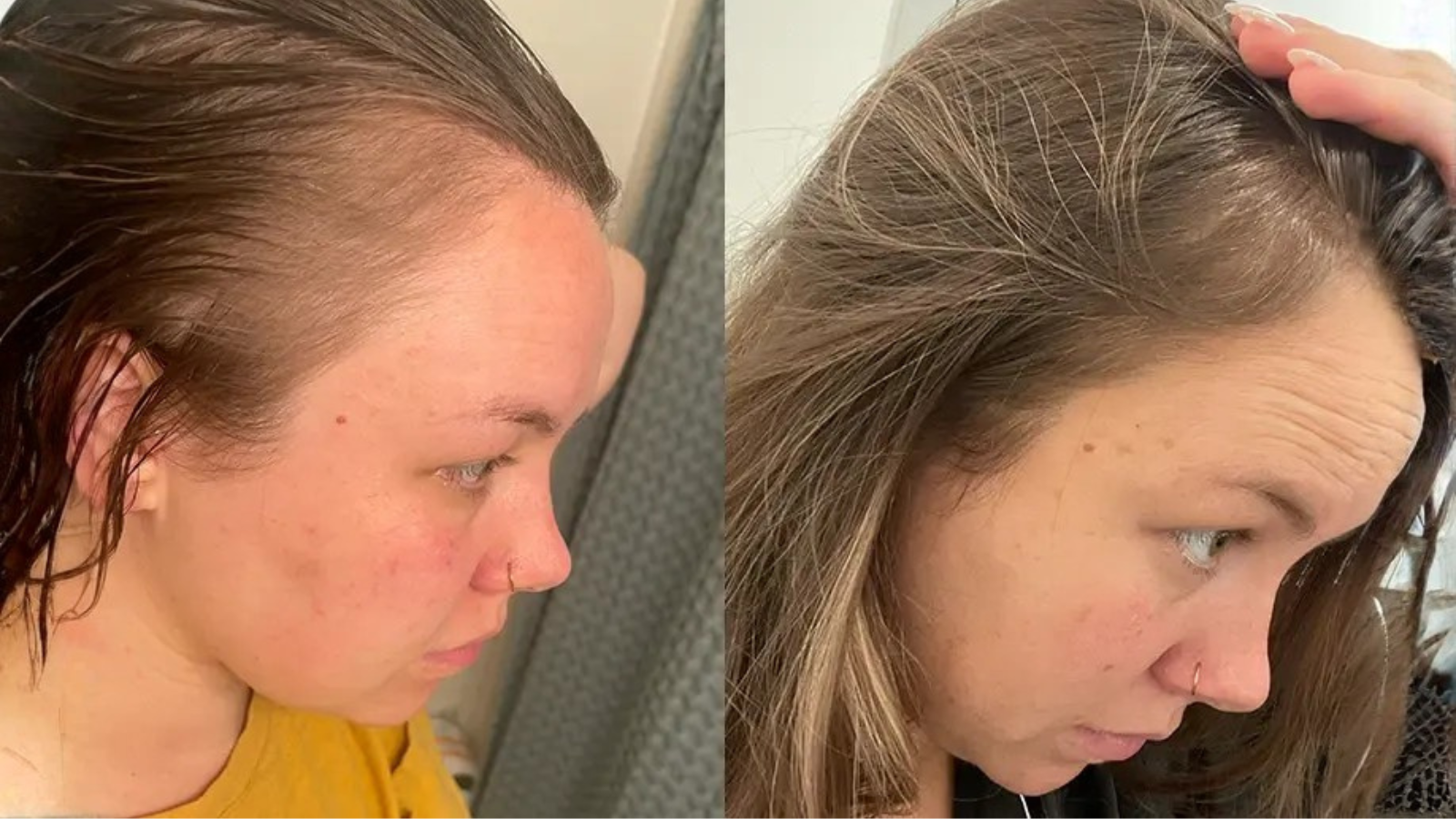
Things changed in college. She experimented with length and color, and added an unhealthy lifestyle, a poor diet, and a lot of stress. Soon she noticed more hair in the shower drain and on her brush. Her hair lost its shine and color, and it felt brittle.

Then she got COVID. It seemed mild, but her shedding got worse afterward. She later learned this is a common aftereffect. Her hair kept getting weaker and thinner, and it split every time it reached about shoulder length.

"I lost so much confidence and stopped feeling attractive."

She read forums, watched videos, and tested one fix after another.

What she tried first

In her words, these are the things that didn't work for her, so you don't have to spend the time.

  • Deep conditioningSeemed to help at first, but by week three her hair reverted.
  • Rice waterTook a lot of time and she saw no results.
  • Rosemary, coconut, and castor oilsCastor oil looked good at first, but the results were temporary and surface-level.
  • New brushes and a new brushing routineNo visible change.
  • Scalp massagesHer hair got so greasy she had to wash it daily.
  • Hair growth medicationThe effect lasted only while she used it, and the initial shedding was hard to manage.

The tip that changed her mind

She had nearly given up when her mom's friend, a trichologist, mentioned a hair care brand that's becoming increasingly popular. It's still fairly niche. You won't likely find it on a supermarket shelf, so people often hear about it from dermatologists or trichologists.

Joanna was skeptical. She'd already tried so much. But her mom showed her a few before-and-after photos from the friend, and the results looked hard to believe.

What she noticed over time

This is Joanna's own account. Everyone's hair is different.

  1. 1

    After the first month

    Baby hair began filling in at her temples and along her part. Her hair also had a shine she'd forgotten it could have.

  2. 2

    The next 4–5 weeks

    She saw clear improvement in thickness and noticeably less shedding. The shower drain stopped clogging.

  3. 3

    After a few months

    She describes the results as evident.

  4. 4

    Two months after that

    Her hair looked close to how it did when she was young, with thickness, shine, and length. She says her confidence came back too.

Why she thinks it worked

Here's the explanation Joanna shares, including what she says her trichologist friend told her.

A different kind of formula

It includes selenium, zinc, biotin, and 70+ other minerals and essential oils, made to support hair growth and health.

A built-in delivery system

It also has fulvic acid, a natural compound she was told helps carry minerals and nutrients to the scalp and helps protect the skin from environmental stressors.

The routine is simple. She started out using the set every other day. Now she uses it in the shower, adds a spray on dry hair whenever she wants (she says it leaves no residue), and brushes her hair well. After hours a week spent on oils and deep conditioning, she says this takes almost no effort.

One more note from her: she's noticed these products are often sold out.

Curious about the full details?

The official page has the full product details, plus current availability and discounts (up to 50% off).

Check Availability

You'll go to the official page in a new tab.

Results may vary from person to person. This story reflects one person's experience. Our service is not intended to diagnose, treat, cure, or prevent any disease and is not a substitute for medical advice.